Water Depth
Deep pools are part of the public description, but depth still needs to be checked at the exact line because waterfall hydraulics and rock shelves can change the landing.

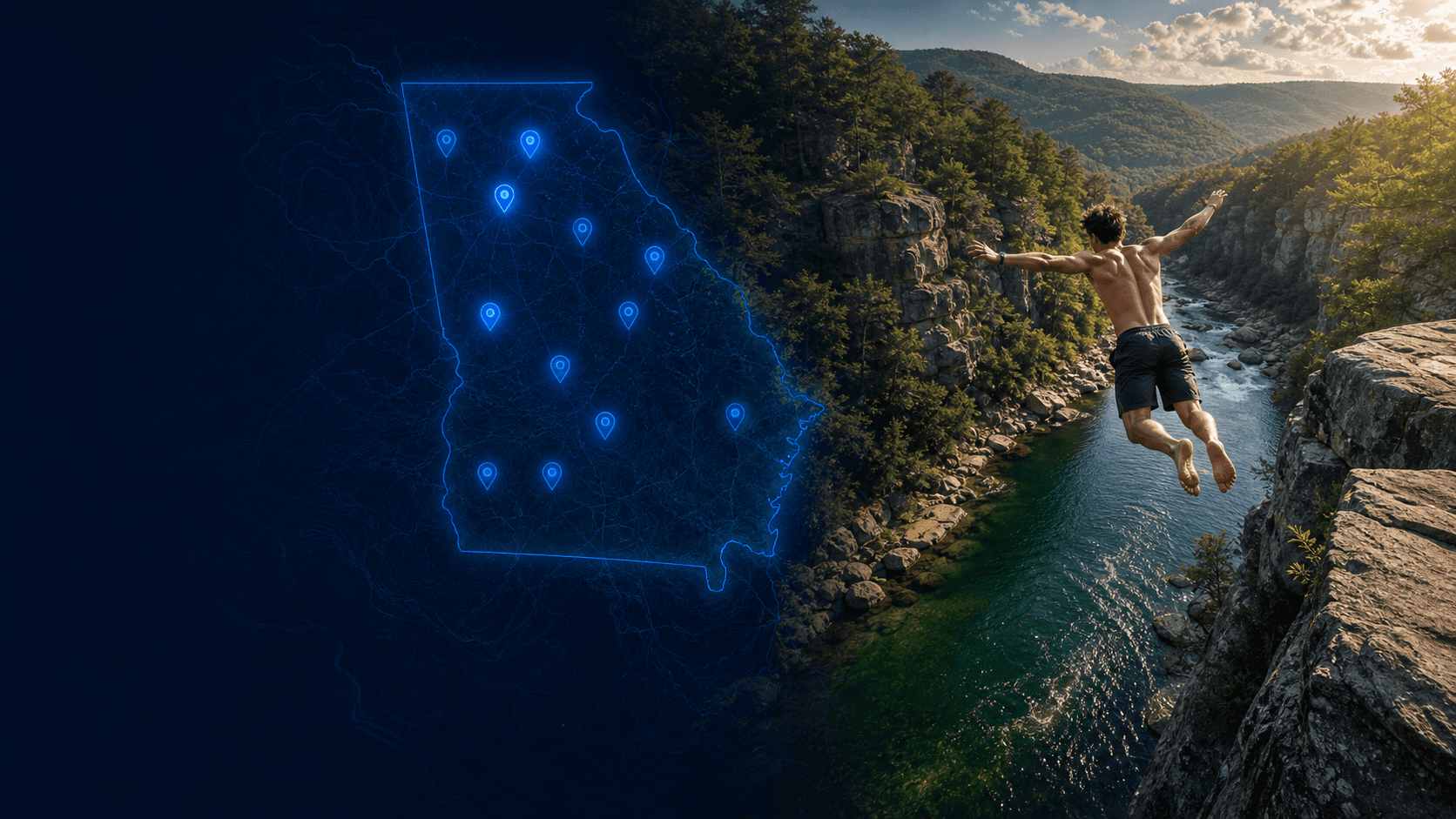
Blue Ridge, Georgia, United States
FLOW, REMOTENESS, AND EXIT CONSEQUENCES NEED A FRESH CHECK*
Jacks River Falls appears to be a freshwater wilderness waterfall with deep pools in north Georgia. Use it only after checking current flow, the exact landing depth, the approach effort, and whether the exit still feels manageable after the swim.
At Jacks River Falls, remoteness is part of the risk. If the water or the exit is unclear, the smartest line may be no line at all.
Overview
Jacks River Falls is a remote waterfall-and-pool spot in Georgia’s Cohutta Wilderness. Public sources support the location and the deep-water setting, but any jump decision still depends on flow, landing depth, and the cost of getting it wrong far from quick help.
Quick Answer
Jacks River Falls appears to be a freshwater wilderness waterfall with deep pools in north Georgia. Use it only after checking current flow, the exact landing depth, the approach effort, and whether the exit still feels manageable after the swim.
Key Takeaway
At Jacks River Falls, remoteness is part of the risk. If the water or the exit is unclear, the smartest line may be no line at all.
Quick Answer
Jacks River Falls appears to be a freshwater wilderness waterfall with deep pools in north Georgia. Use it only after checking current flow, the exact landing depth, the approach effort, and whether the exit still feels manageable after the swim.
Key Takeaway
At Jacks River Falls, remoteness is part of the risk. If the water or the exit is unclear, the smartest line may be no line at all.
Conditions and planning notes
Deep pools are part of the public description, but depth still needs to be checked at the exact line because waterfall hydraulics and rock shelves can change the landing.
Use the Beech Bottom Trail / Cohutta Wilderness approach as the access anchor and confirm current route conditions before committing to the hike.
Treat the hike as part of the risk calculation. Save enough time and energy to scout the pool carefully and still hike out safely.
Likely hazards include changing waterfall flow, difficult exits, slick rock, fatigue, remote terrain, and a longer rescue timeline than at roadside spots.
Any usable ledge or jump point here should be treated as highly condition-dependent rather than a fixed feature.
The main concerns are moving water, remote access, slippery rock, fatigue on the hike out, and limited help if something goes wrong.
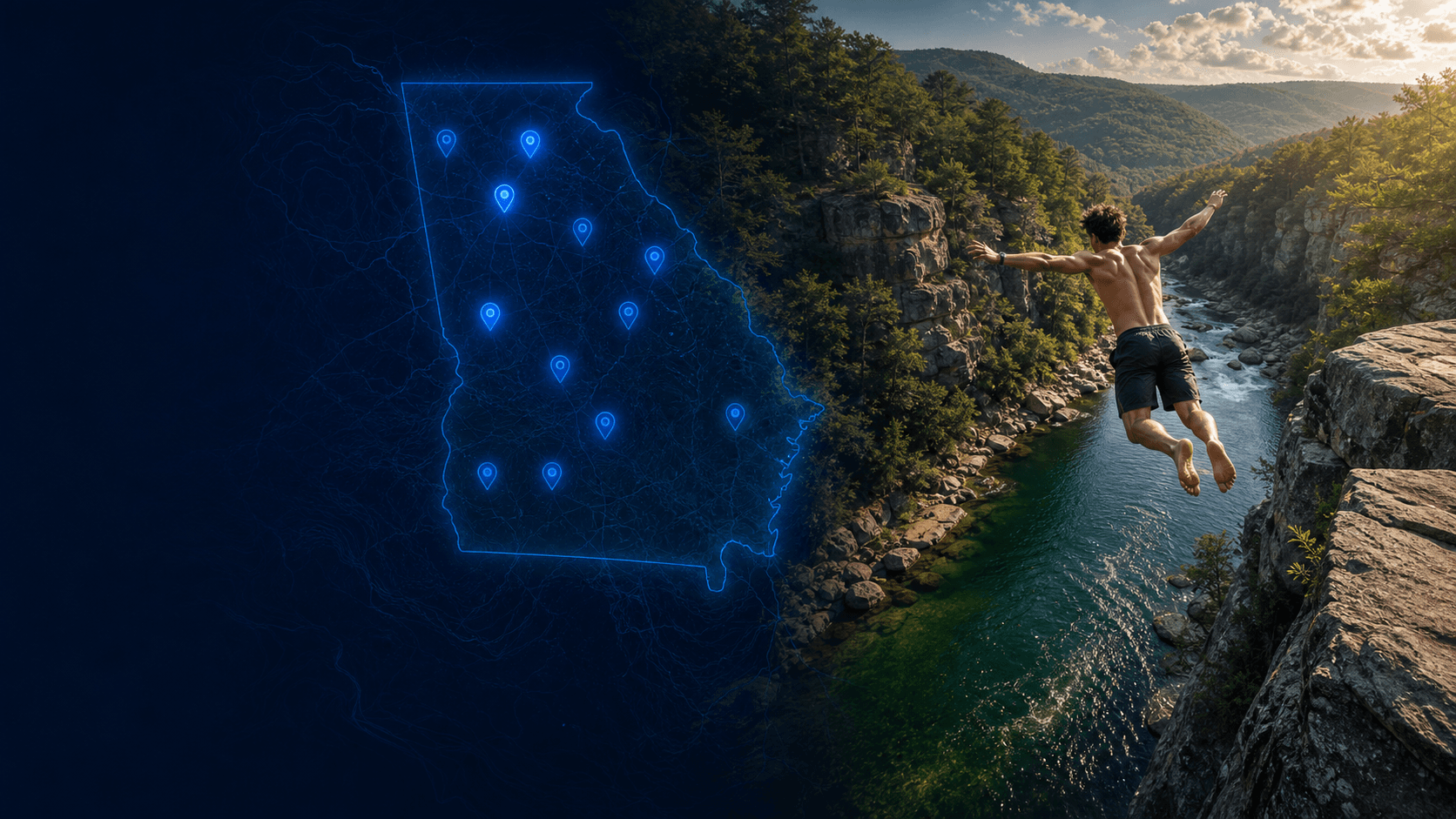
Map location
Use the source location details as a starting point until exact coordinates are added.
Jacks River Falls sits in the Cohutta Wilderness, where public hiking sources describe a major waterfall pouring into deep freshwater pools after a long backcountry approach. That setting is part of its appeal, but it also changes the decision-making standard. A place this remote asks more than whether the water looks deep from shore. Flow, footing, fatigue, and the swim-out all matter more when the hike back is long and the terrain is rough. Some routes to the falls involve water crossings, while others still demand time, effort, and stable footing just to reach the main pool. Even if one spot looks jumpable, the true question is whether the landing, exit, and return all stay reasonable once you are wet and tired. Before treating Jacks River Falls as jumpable, scout the pool from the water, read the current around the base, and decide whether the day’s flow and footing make the risk worth it. If the river is moving hard or the exit feels awkward, it is better used as a wilderness swim and waterfall hike.
FAQs
 50ft
50ftLoganville, Georgia, United States
 50ft
50ftLoganville, Georgia, United States
40ftAtlanta, Georgia, United States
 40ft
40ftSandy Springs, Georgia, United States
Plan this spot